A Guide to Local Guides and Cultural Experiences in Vilanculos
How to choose a local guide in Vilanculos and take part in cultural experiences with curiosity, consent and respect.

A local guide can change the way you understand a destination. Instead of simply moving between sights, you can learn how a place works, hear context that is not immediately obvious to a visitor and discover local businesses or neighbourhoods you might otherwise miss. In Vilanculos, a guided experience can offer a deeper perspective on coastal life, local food, traditions and the relationship between communities and the sea.
The most rewarding cultural experiences are not necessarily the most elaborate or expensive. They are the ones that allow you to learn something meaningful while treating the people who share their knowledge with dignity. Choosing a guide thoughtfully, asking questions with curiosity and respecting personal boundaries can make a significant difference to your experience.
Why choose a local guide in Vilanculos?
Travelling independently gives you freedom, but it can be difficult to understand the context behind what you see. A local guide can help connect places, people and everyday activities to the wider history and character of Vilanculos.
Depending on their experience and the activities they offer, guides may introduce visitors to local markets, coastal areas, food traditions, community businesses or the history of the town. They may also help explain how fishing, tourism, transport and trade shape life along the coast.
Local knowledge can be particularly useful when you want to explore beyond the places most commonly visited by tourists. A guide may help you understand how to navigate an area respectfully, communicate with local businesses or identify experiences that match your interests.
However, no guide knows everything about a destination, and one person's perspective cannot represent an entire community. Think of a guided experience as an opportunity to learn from an individual with their own knowledge, experiences and point of view.
What makes a good local guide?
A good guide does more than lead a group from one place to another. They communicate clearly, listen to visitors and explain what an experience involves before it begins.
Before booking, look for someone who can answer practical questions about the itinerary, timing, transport, group size, price and any additional costs. They should be clear about what is included and what is not, rather than relying on vague promises of an unforgettable or completely authentic experience.
Consider these qualities when choosing a guide:
- Clear communication: The guide explains the plan, answers questions and makes expectations clear before the experience starts.
- Relevant local knowledge: They can explain the places and subjects covered by the tour without pretending to be an authority on every aspect of local life.
- Respect for personal boundaries: They do not pressure residents to participate, share private information or pose for photographs.
- Responsible practices: They respect environmental rules, private property and local customs.
- Transparent pricing: They explain the agreed price, what it covers and whether additional expenses are likely.
- Attention to safety: They provide appropriate instructions for walking routes, transport and any activities involved.
Reviews can help you understand how previous guests experienced a tour, but read them carefully. Look for specific comments about communication, knowledge, reliability and respect rather than relying on ratings alone.
Ask questions that open a conversation
One of the best ways to learn from a local guide is to ask thoughtful questions. You do not need to prepare a formal interview. A genuine interest in the place and the people who live there is usually a good starting point.
You might ask about the daily rhythm of Vilanculos, the foods commonly prepared in the region, the history of a particular neighbourhood or how coastal livelihoods have changed over time. If you are interested in the relationship between the town and the islands, ask how fishing, tourism and conservation affect life along the coast.
Questions about food can be especially useful because meals and ingredients often provide a natural introduction to local culture. Ask which dishes are commonly eaten, where ingredients come from or whether there are seasonal foods worth trying. If you have dietary requirements, explain them in advance so the guide can help you understand what is suitable.
It is equally important to listen. Give your guide time to explain, and avoid turning every conversation into a comparison with your own country. You may hear perspectives that challenge your expectations or reveal that an issue is more complicated than it first appeared.
Ask open questions rather than expecting a particular answer. For example, instead of asking whether tourism is good or bad for local communities, you could ask how tourism creates opportunities and what challenges it brings. This leaves room for a more nuanced conversation.
Understand the difference between cultural exchange and performance
The word “authentic” appears frequently in travel marketing, but it can be misleading. Local life is not a performance arranged for visitors, and residents should not be expected to provide access to their homes, traditions or personal experiences simply because someone has paid for a tour.
A thoughtful cultural experience gives people control over what they choose to share. It may involve a conversation with a knowledgeable guide, a visit to a public market, a meal at a local business or an activity that has been organised with the participation of the people involved.
Be cautious about experiences that promise unrestricted access to private homes, sacred spaces or sensitive community activities without explaining how permission is obtained. Ask who organises the experience, who participates and whether the people involved have agreed to welcome visitors.
There is no single way for a place or community to be authentic. Everyday life changes, and people have different beliefs, routines and ambitions. Approaching a destination with curiosity rather than fixed expectations helps you appreciate this complexity.
Photography, privacy and consent
Photographs can preserve memories of a trip, but taking someone's picture without permission can make an otherwise positive interaction uncomfortable. This is particularly important when photographing children, people at work, private homes or activities that may be sensitive.
Ask before taking identifiable photographs, even when a person is in a public place. A guide can help explain local expectations and indicate when photography may be inappropriate, but their presence does not automatically mean everyone has consented.
If someone declines, accept the answer without argument. Do not assume that offering money makes it acceptable to photograph someone, and never pressure a person to pose simply because you are interested in their clothing, work or surroundings.
Children deserve particular care. Ask the appropriate adult for permission and respect any restrictions. Avoid publishing identifying images of children online without appropriate consent.
Consent also applies to sharing images after the trip. Someone may be comfortable with a photograph being taken but not want it published publicly. When in doubt, ask before posting.
Explore local food and businesses thoughtfully
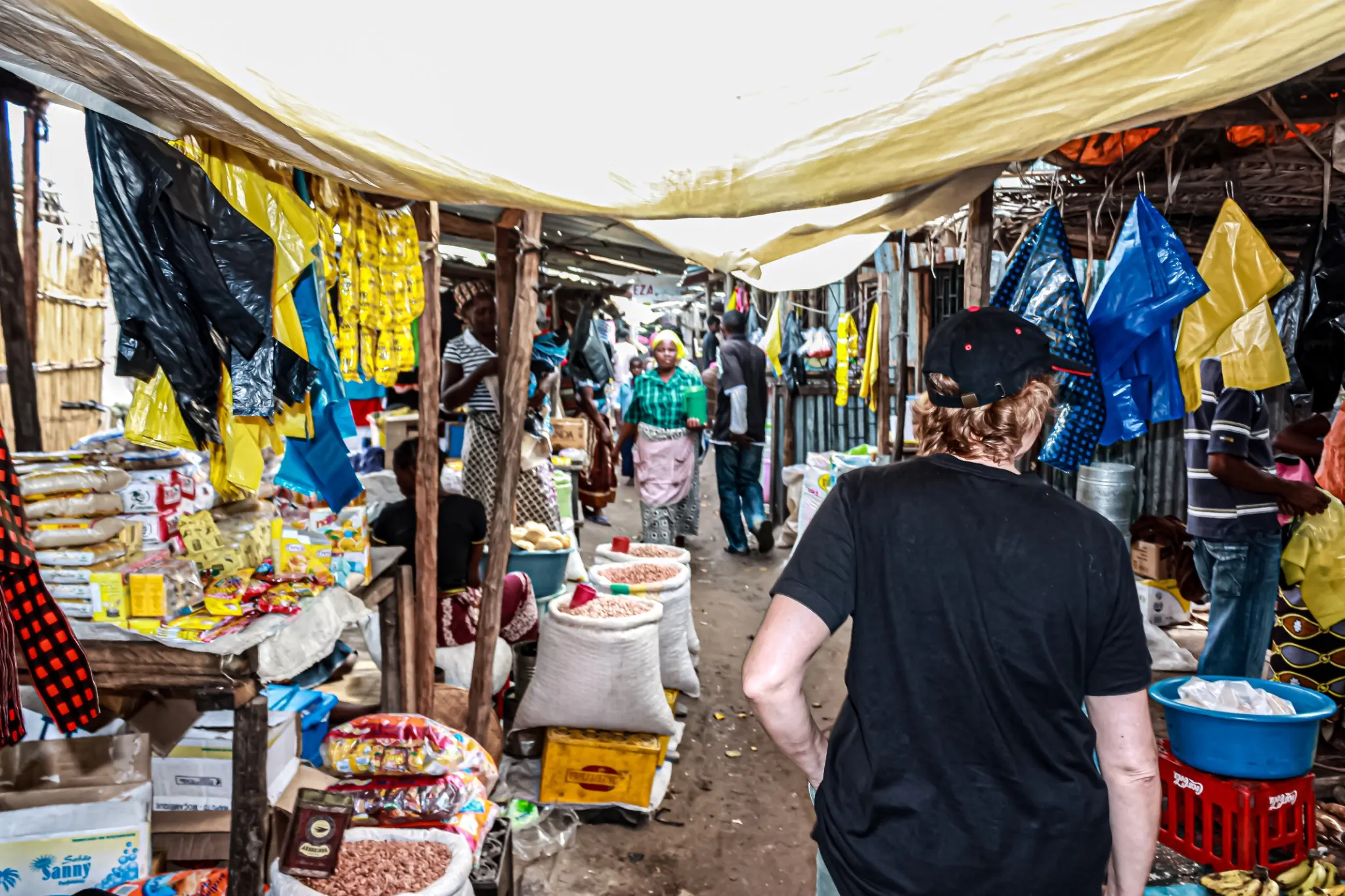
Food, markets and small businesses can provide an accessible way to experience Vilanculos beyond its beaches and island excursions. Depending on what is available during your visit, you might explore local ingredients, try regional dishes, visit a market or learn about the businesses that serve residents as well as visitors.
A local guide can help you understand what you are seeing, explain unfamiliar ingredients and suggest places that suit your interests. They may also help with communication when you need to ask about a menu, prices or dietary requirements.
When buying food, crafts or other products, clarify the price before completing the transaction. Pay the agreed amount and avoid bargaining in a way that turns a small purchase into an uncomfortable interaction. If you want to understand how a product is made or sourced, ask respectfully and accept that the seller may not have time to explain.
Supporting local businesses can help keep more visitor spending within the destination, although the impact depends on how a business operates and who benefits from the transaction. Where possible, choose businesses that are transparent about their products, prices and practices.
Be particularly careful with products made from protected wildlife, coral, shells or other marine materials. Do not purchase items that may have been obtained illegally or in ways that damage protected habitats. If you are uncertain about a product, it is better not to buy it.
Respect customs without making assumptions
Travelling responsibly does not require you to know every local custom before arriving. It does require a willingness to ask, listen and adapt when someone explains that a particular behaviour is inappropriate.
Dress expectations can vary according to the setting and activity. What is comfortable at a beach may not be suitable for every public, religious or community setting. If you are unsure, ask your guide or host what is appropriate.
Be considerate when entering public spaces, visiting businesses or observing community activities. Do not assume that an invitation to view something means every area is open to visitors, and never enter private property without permission.
Language is another useful part of cultural exchange. Learning a few polite expressions in Portuguese, which is widely used in Mozambique, can help you approach everyday interactions with greater confidence. Local languages are also part of the country's cultural diversity, and a guide may be able to explain where they are spoken and how they are used.
You do not need to demonstrate expertise or imitate local customs to show respect. A polite greeting, a willingness to listen and an appreciation of differences can be more valuable than trying to perform familiarity you do not have.
Connecting culture, livelihoods and conservation
Vilanculos and the Bazaruto Archipelago are connected through the sea, trade, fishing and tourism. The archipelago's protected marine environment is also home to communities whose livelihoods are linked to natural resources. Understanding this relationship helps visitors avoid treating nature and people as separate parts of the destination.
Tourism can create income and employment through guiding, transport, accommodation, food, crafts and excursions. At the same time, tourism needs to be managed thoughtfully so that it does not create unnecessary pressure on wildlife, habitats or the people who live in the area.
Responsible visitors can contribute by choosing operators who follow local rules, respecting protected areas, avoiding waste and supporting local businesses where possible. These actions do not solve every conservation or economic challenge, but they help make individual travel choices more considerate.
It is also important not to expect a local guide to speak for every resident or explain every conservation issue. Different people may have different experiences of tourism, fishing regulations and changes in their local environment. Allowing space for these differences leads to a more balanced understanding.
Read our feature on the people and livelihoods behind Bazaruto's conservation story and our guide to discovering Vilanculos beyond the islands.
Plan a mainland day around local experiences
If your itinerary is centred on boat trips and island excursions, consider setting aside a day to explore the mainland. A guided walk, a visit to a market, a meal at a local establishment or a conversation with a knowledgeable resident can offer a different perspective on the destination.
There is no need to fill the entire day with organised activities. Leave time for unplanned discoveries, a relaxed meal or a walk along the coast. A slower schedule can make it easier to have conversations and enjoy places without feeling rushed.
Before confirming a guided experience, establish where it begins and ends, how you will get there, how long it lasts and whether any additional costs apply. If the itinerary involves walking, ask about the distance, terrain, shade and accessibility. If it includes food, explain dietary requirements in advance.
Remember that availability and arrangements can change. Ask for current recommendations and confirm the details directly with the operator rather than relying on an old review or an outdated online listing.
SAMARA Lodge Vilanculos can be a starting point for planning a coastal visit. Ask the team for current recommendations, then confirm the itinerary, price and arrangements with the provider before booking.
Explore SAMARA booking options.
How to make sure your spending is responsible
Choosing a local guide is one way to direct spending towards people who contribute knowledge and services to your visit. You can make the arrangement clearer and fairer by discussing the price, duration and inclusions before the experience begins.
Ask whether transport, refreshments, entrance fees or other expenses are included. If a guide recommends additional activities, clarify whether they are optional and whether they involve separate payments. Clear expectations reduce the chance of misunderstandings later.
Pay the agreed price and treat the guide's time and expertise with respect. If you are dissatisfied with an experience, raise the issue calmly and specifically rather than making assumptions about the person or the wider community.
When choosing where to spend money, consider the value of the service, the quality of the information provided and whether the arrangement appears transparent. The lowest price is not always the best indicator of a responsible experience, just as a high price does not automatically guarantee quality.
Above all, avoid treating community visits as an opportunity to distribute gifts or money without understanding the context. If you want to support a local initiative, ask a trusted organisation or guide about appropriate ways to contribute.
Questions to ask before booking a cultural experience
A short conversation before confirming a tour can help you decide whether it is right for you. Consider asking:
- What will the experience include, and how long will it take?
- Who will lead the activity, and what local knowledge or experience do they bring?
- Is the experience organised with the consent and participation of the people involved?
- What is included in the price, and are there any additional expenses?
- Are transport, accessibility, dietary requirements or other practical needs accommodated?
- Are there any expectations about clothing, photography or behaviour?
- What happens if weather or other circumstances affect the planned activity?
These questions are not intended to turn a cultural experience into a formal checklist. They help establish clear expectations and give the guide an opportunity to explain how the activity works.
Make curiosity part of the journey
The most memorable travel experiences are not always the ones with the most impressive scenery. Sometimes they come from a conversation that changes how you understand a place, a meal that introduces you to unfamiliar flavours or a guide who helps you see the connections between the coast, local livelihoods and everyday life.
In Vilanculos, a thoughtful cultural experience can complement time spent exploring the Bazaruto Archipelago. It gives you an opportunity to learn about the mainland and the people who make the destination what it is, rather than experiencing the region only through its landscapes.
Approach these encounters with curiosity, be clear about expectations, respect privacy and allow people to decide what they wish to share. You will leave with a richer understanding of the destination while helping make tourism a more respectful exchange.
“Good cultural travel begins with curiosity and continues with consent.”
Frequently asked questions
How do I find a local guide in Vilanculos?
Start by asking your accommodation for current recommendations, researching local tour providers and reading recent reviews. Confirm the itinerary, price, inclusions and arrangements directly with the guide or operator before booking.
What cultural experiences can I look for?
Depending on current availability, you could consider guided walks, market visits, local food experiences or activities that introduce you to the town's coastal life and businesses. Ask what is genuinely available during your dates rather than assuming a particular experience is offered year-round.
Should I tip a local guide?
Ask whether a service charge or tip is included and whether tipping is customary for the particular service. If you choose to tip, base the decision on the quality of the experience and your budget, and clarify any expectations before payment if necessary.
Is it acceptable to photograph local people?
Ask permission before taking identifiable photographs, especially of children, people at work or private homes. If someone declines, respect their decision. Permission to take a photograph should not automatically be treated as permission to publish it online.
How can I support local communities responsibly?
Consider booking transparent local services, buying appropriate locally made products and following the guidance of credible community or conservation initiatives. Respect local privacy and avoid buying products made from protected wildlife or marine materials.