A Responsible Traveller’s Guide to Bazaruto’s Dugongs and Marine Life
Learn why Bazaruto matters for dugongs, turtles and marine biodiversity—and how visitors can help protect this remarkable seascape.

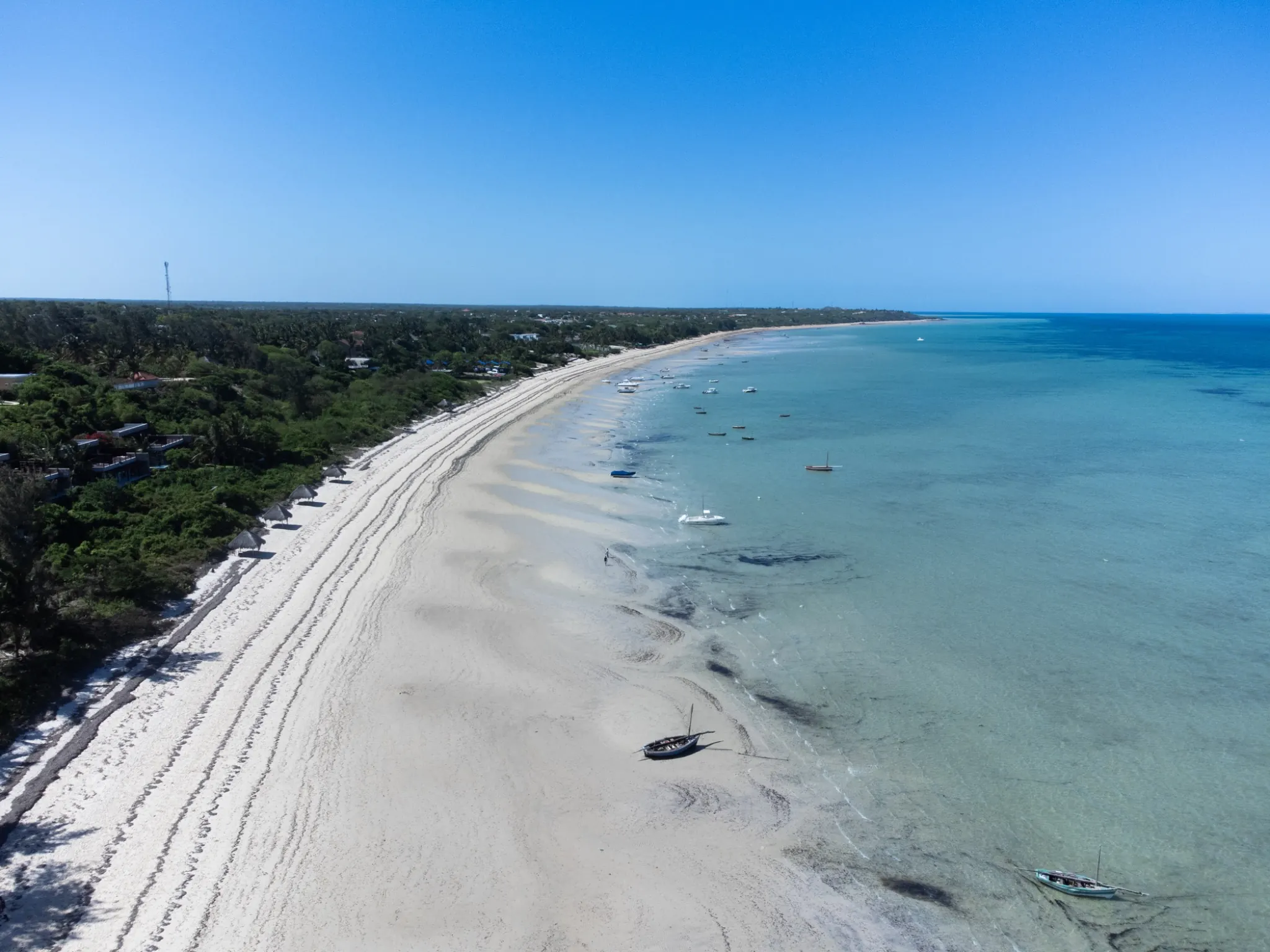
The Bazaruto Archipelago, off the coast of Vilanculos in Mozambique, is known for its clear waters, coral reefs, seagrass habitats and remarkable marine life. For visitors, the opportunity to encounter this environment is a major part of the appeal. For the wildlife that lives here, however, these waters are home.
Among the archipelago’s most important inhabitants are dugongs: elusive marine mammals that depend on seagrass for food. Bazaruto is particularly significant for the conservation of the East African dugong population, making responsible tourism especially important in this part of the Indian Ocean.
Whether you are planning an island excursion, a snorkelling trip or simply time by the coast, understanding how to behave around marine wildlife can make your visit more rewarding. This guide explains what makes Bazaruto’s marine environment special, how to approach wildlife encounters responsibly and how visitors can help protect the place they have come to experience.
Why Bazaruto’s marine life matters
The Bazaruto Archipelago lies off the coast of Inhambane Province in southern Mozambique. Its coastal and marine habitats include sandy beaches, dunes, coral reefs, seagrass beds and open water. These environments support a variety of marine species and contribute to the ecological importance of the region.
The archipelago includes five principal islands: Bazaruto, Benguerra, Magaruque, Santa Carolina and Bangué. Together with the surrounding waters, they form a landscape where marine ecosystems, local livelihoods and conservation are closely connected.
The area is important not only for its scenery but also for the habitats it protects. Seagrass beds provide feeding grounds for dugongs, while coral reefs support diverse communities of fish and other marine organisms. Different habitats serve different ecological functions, and protecting the wider environment matters just as much as protecting individual animals.
For visitors, this means that a memorable experience does not have to involve a close encounter with a particular species. Observing a reef without disturbing it, learning about seagrass habitats or appreciating the coastline from a respectful distance can all be valuable parts of a visit.
Meet the dugong: one of Bazaruto’s most important marine mammals
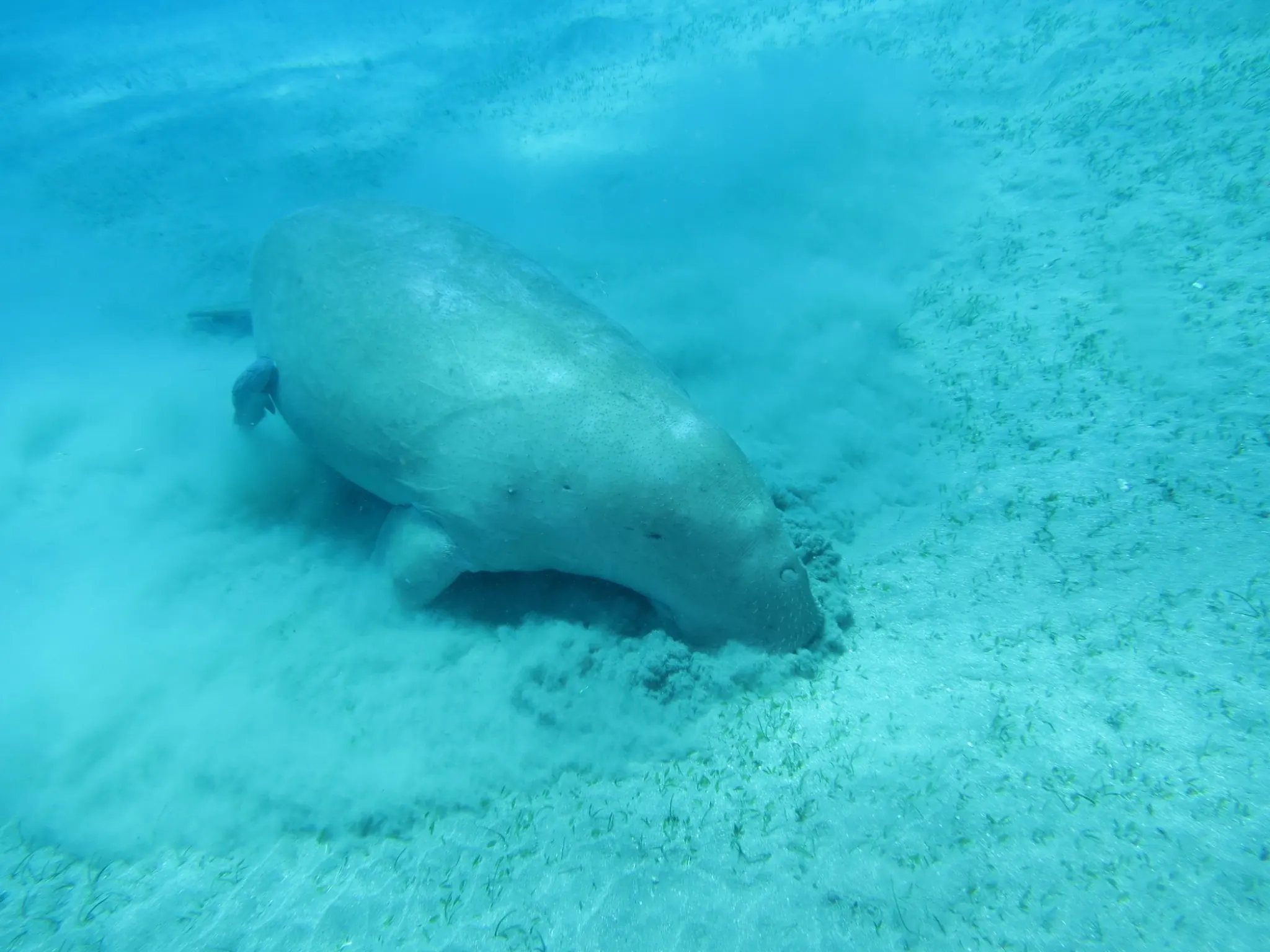
Dugongs are large marine mammals that feed primarily on seagrass. They are sometimes called sea cows because of their grazing behaviour, but they are wild animals with specific habitat requirements and a slow, vulnerable way of life.
Unlike dolphins, which are frequently seen travelling at the surface, dugongs may spend much of their time feeding underwater. They can be difficult to spot, and sightings depend on factors such as location, water conditions and the animals’ natural movements.
The East African dugong population is particularly vulnerable. Bazaruto is recognised as an important stronghold for this population, which has been assessed as Critically Endangered. Protecting seagrass habitats and reducing disturbance are important parts of safeguarding its future.
Why seagrass is essential
Seagrass is a flowering marine plant that grows in shallow coastal waters. It provides food for dugongs and creates habitat for other marine organisms. These underwater meadows also contribute to coastal ecosystem health.
Seagrass habitats can be damaged by physical disturbance, pollution and changes to coastal conditions. Anchoring, careless boating and other activities can cause harm when they are not managed appropriately. Protecting dugongs therefore involves more than avoiding direct contact with the animals; it also means respecting the habitats on which they depend.
When visiting the archipelago, follow your operator’s instructions about boat routes, anchoring and permitted activities. Do not encourage a crew to approach a dugong or enter a sensitive area simply to improve a photograph.
What other marine life might you encounter?
Dugongs are an important part of Bazaruto’s conservation story, but they are not the only animals that make the region special. Depending on the location and conditions, visitors may encounter a variety of marine life during boat trips, snorkelling or diving.
Coral reef fish
Coral reefs provide habitat for many species of tropical fish. During a snorkelling excursion, you may see fish moving between coral formations, feeding or sheltering in the reef. The species and abundance visible on a particular day depend on the site, water conditions and the health of the habitat.
Observe from a comfortable distance and avoid chasing fish or reaching into crevices. Coral structures are fragile, and even accidental contact can cause damage.
Sea turtles
Sea turtles inhabit the wider marine environment around Mozambique. Depending on the species and location, turtles use coastal waters for feeding, migration and other parts of their life cycle.
A sighting is never guaranteed. If you encounter a turtle in the water, give it space and allow it to move freely. Never attempt to touch, feed, pursue or block its path. On a beach, avoid disturbing turtles or nesting areas, and follow any local restrictions designed to protect them.
Dolphins
Dolphins may be encountered in the waters around the region. They are wild marine mammals whose movements and behaviour should not be controlled for the benefit of visitors.
If dolphins appear near a boat, follow the crew’s guidance and avoid encouraging sudden approaches or persistent pursuit. A brief sighting from a respectful distance is preferable to an encounter that disrupts the animals.
Rays and other marine animals
Rays and other marine species inhabit the coastal waters and seabeds of the archipelago. Some may be visible while snorkelling, while others remain difficult to observe.
Do not touch or attempt to handle marine animals, even if they appear calm or stationary. Give them room to move away, and follow your guide’s instructions about where it is safe to enter the water.
How to behave if you see a dugong
Seeing a dugong in the wild can be a memorable moment, but the encounter should take place on the animal’s terms. The priority is to avoid causing stress or interrupting its natural behaviour.
- Keep your distance. Do not approach closely, surround the animal or attempt to touch it.
- Never chase it. If the dugong moves away or dives, let it go. Do not follow it to obtain a better view.
- Keep noise and movement low. Avoid sudden movements, shouting or splashing intended to attract its attention.
- Follow the crew’s instructions. Respect the operator’s rules and any applicable park guidance about wildlife encounters.
- Do not feed it. Feeding wildlife can alter natural behaviour and is not an appropriate way to encourage a sighting.
- Take photographs without pursuing the animal. Use your camera from a respectful distance and accept that the view may be brief.
- Never treat a sighting as a guarantee. Dugongs are wild animals, and a responsible operator should not promise that you will see one.
If a boat approaches too closely or an encounter appears to be disturbing the animal, do not encourage the behaviour. Ask the crew to maintain an appropriate distance and follow local guidance.
Responsible snorkelling and diving in Bazaruto
Snorkelling and diving can offer a closer look at the marine environment, but they also require care. The aim is to observe the underwater world without damaging it or disturbing the animals that live there.
Choose an appropriate excursion
Before booking, ask about the planned location, expected conditions, safety arrangements and the operator’s approach to wildlife. If you are a beginner, explain your experience level and ask whether the trip is suitable for you.
Conditions can change with wind, swell, tides and visibility. A responsible guide should be prepared to change the plan when the intended location is unsuitable. Do not feel pressured to enter the water if you are uncomfortable or if the conditions exceed your ability.
For more practical advice, read our guide to choosing an island excursion from Vilanculos and our article on what first-time visitors should know about snorkelling in Bazaruto.
Protect the reef
Coral reefs are living structures. Touching, standing on or breaking coral can cause damage, even when contact seems brief or accidental.
- Maintain enough distance to avoid contact with the reef.
- Keep your fins away from coral and the seabed where possible.
- Never stand on coral or use it to support yourself.
- Do not collect coral, shells or other marine material.
- Do not feed fish or other wildlife.
- Follow your guide’s instructions about currents, entry points and safe swimming areas.
If you are not confident controlling your movement in the water, tell your guide before entering. Flotation equipment may be appropriate depending on the activity and conditions. It is better to choose a suitable location than to risk damaging a reef or putting yourself in difficulty.
Use sun protection thoughtfully
Sun exposure can be significant during a day on the water. A hat, sunglasses, sun-protective clothing and suitable sunscreen can help protect you from the sun.
Products marketed as “reef-safe” should not be assumed to be completely harmless to marine ecosystems. Check product information, follow local advice and consider clothing that reduces the amount of sunscreen needed. Avoid leaving packaging or other waste behind.
Choose a responsible boat operator
The operator you choose can influence both your safety and the impact of your visit. Before booking an island excursion, ask a few direct questions about the trip and how wildlife is treated.
- Safety: What safety equipment is carried, and how does the crew respond if conditions change?
- Wildlife: What rules does the operator follow when encountering dugongs, dolphins, turtles or other animals?
- Itinerary: Which island, reef or location is planned, and how might the route change with the weather?
- Environmental care: How does the operator prevent damage to reefs and sensitive coastal habitats?
- Fees and inclusions: Are park fees, equipment, meals and transfers included in the quoted price?
- Weather policy: What happens if the sea conditions make the planned excursion unsuitable?
Be cautious of operators who promise guaranteed wildlife sightings or advertise close contact with animals as the main attraction. Wild animals cannot be scheduled, and a responsible excursion should not depend on chasing them.
Price is only one part of the decision. Clear safety arrangements, realistic itineraries and respect for wildlife are important considerations when choosing an experience.
Leave no trace on the islands and beaches
Responsible travel extends beyond what happens in the water. Beaches, dunes and coastal areas are part of the same environment as the reefs and seagrass beds offshore.
- Take your rubbish with you. Secure wrappers, bottles and other waste so they cannot blow away or fall into the sea.
- Reduce single-use plastic. Carry a reusable water bottle where practical and avoid unnecessary disposable items.
- Leave natural materials in place. Do not collect shells, coral, plants or other material from the islands.
- Respect wildlife on land. Observe animals from a distance and do not feed or disturb them.
- Follow access rules. Respect protected areas, signs, guide instructions and any restrictions on where visitors may go.
- Be considerate of local communities. Ask permission before photographing people and respect private property and community spaces.
Small actions matter, especially when repeated by many visitors. Leaving a place as you found it helps preserve the experience for future travellers and protects the habitats on which wildlife depends.
Tourism, conservation and local communities
The marine environment around Bazaruto is connected to the lives and livelihoods of people along the coast. Fishing, tourism and other activities depend on the surrounding waters, and conservation takes place within this wider social and economic context.
Responsible tourism should recognise this connection. Choosing local services where appropriate, treating guides and crew respectfully, paying agreed prices and following local rules are practical ways to travel more thoughtfully.
It is also worth approaching conservation with curiosity rather than assumptions. If your guide discusses marine protection, local livelihoods or the challenges facing wildlife, listen and ask respectful questions. A short excursion cannot explain every aspect of the region, but it can provide an opportunity to learn more about the relationship between people and the sea.
Wildlife conservation is not only about what visitors can see. It is also about maintaining the conditions that allow animals and habitats to survive when tourists are not there.
What if you do not see a dugong?
Dugongs are elusive, and no responsible guide can guarantee a sighting. Their movements depend on natural conditions, and they may be underwater or in areas that are not appropriate for visitors to approach.
Not seeing a dugong does not mean that an excursion has failed. The archipelago offers much more to appreciate: its coastal landscapes, seagrass habitats, coral reefs, changing tides and the variety of life supported by the surrounding waters.
Try to approach the experience as an opportunity to understand a living environment rather than as a checklist of animals to photograph. Patience, observation and respect are often more rewarding than pursuing a particular sighting.
If you are especially interested in dugongs, ask your operator about the area’s conservation work and the best ways to learn about their habitat without disturbing them. A responsible operator should be honest about the uncertainty of wildlife encounters.
Frequently asked questions about Bazaruto’s marine life
Are dugongs found in the Bazaruto Archipelago?
Yes. The archipelago is an important area for the East African dugong population. Dugongs feed on seagrass and can be difficult to observe, so sightings are never guaranteed.
Are dugongs endangered?
The East African dugong population has been assessed as Critically Endangered. Protecting seagrass habitats and reducing disturbance are important parts of conserving this vulnerable population.
Can I swim with dugongs in Bazaruto?
Any wildlife encounter must follow applicable park rules, local guidance and the operator’s instructions. Do not pursue, touch, surround or attempt to interact with dugongs. If an encounter occurs, maintain a respectful distance and allow the animal to move freely.
What marine animals might I see in Bazaruto?
Depending on the location and conditions, visitors may encounter tropical reef fish, rays, dolphins, sea turtles and other marine life. These are wild animals, and sightings vary. No particular species should be treated as guaranteed.
Is snorkelling harmful to coral reefs?
Snorkelling does not have to damage a reef, but careless contact can cause harm. Avoid touching or standing on coral, keep your fins clear of the reef and follow your guide’s instructions. Choose an activity suited to your swimming ability and the conditions.
How can I choose a responsible island excursion?
Ask about safety equipment, the itinerary, park fees, environmental practices, wildlife-viewing rules and the policy for poor weather. Be wary of guaranteed sightings or excursions that promote close contact with wild animals.
What should I do with rubbish during an island trip?
Keep all rubbish secured and take it back with you for appropriate disposal. Do not leave waste on beaches or throw anything into the sea. Avoid collecting natural materials from the islands or reefs.
Experience Bazaruto with care
The Bazaruto Archipelago is remarkable not simply because of its beaches and clear water, but because of the marine environment that exists beneath and beyond the surface. Dugongs, coral reef communities, turtles, dolphins and other wildlife depend on habitats that deserve respect long after a visitor’s trip has ended.
As you explore from Vilanculos, choose activities carefully, listen to local guidance and allow wildlife to remain wild. A responsible encounter may be brief, and a particular animal may never appear. What matters is that your visit does not come at the expense of the environment you came to appreciate.
Plan your stay in Vilanculos with SAMARA Stays, and make room in your itinerary to experience the coast thoughtfully.