Photographing Vilanculos: Light, Landscape and Respect
A photographer’s guide to capturing Vilanculos thoughtfully, from coastal light and dhow silhouettes to wildlife distance and consent.

Vilanculos offers a photographer a changing canvas: boats moving against the horizon, shifting colours in the water, pale sand, open sky and the details of everyday coastal life. The landscape can look different from one hour to the next, and the most memorable photographs often come from waiting rather than rushing. Watch the light, learn the place and treat the people and wildlife in your frame with respect.
Whether you use a professional camera, a compact digital camera or your phone, photographing Vilanculos is about more than collecting attractive views. It is an opportunity to notice the relationship between the mainland, the ocean and the people who live and work along this stretch of Mozambique's coast.
A thoughtful approach can help you return with photographs that are visually compelling while remaining honest about the destination. From the first light on the shoreline to boats returning towards the mainland, there is plenty to observe without disturbing the scene.
Work with the coastal light
Light is one of the most important elements in coastal photography. In Vilanculos, the open horizon, reflective water and bright sand can create strong contrasts, particularly around the middle of the day. Early morning and late afternoon often provide softer light, warmer tones and longer shadows that add depth to a photograph.
These periods can be especially useful for capturing the outline of a dhow, the texture of the beach or the changing colours of the sea. The exact conditions depend on the weather, season and direction of the light, so allow yourself time to observe how the scene changes before choosing a composition.
Early morning: quiet scenes and gentle colour
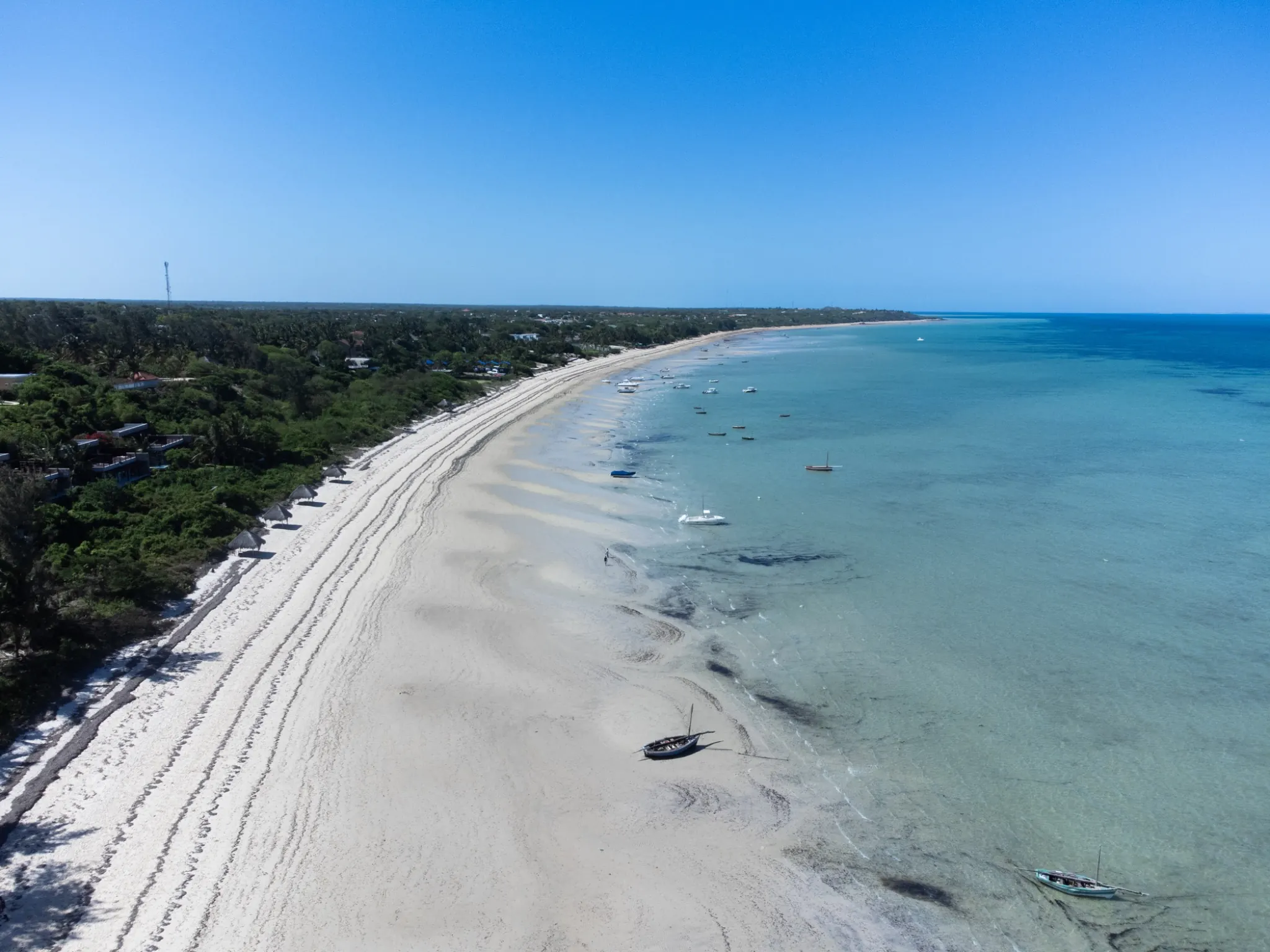
Morning can offer a different atmosphere from the busier hours of the day. The shoreline may be quieter, the light softer and the water marked by subtle reflections. Look for simple compositions: a boat near the horizon, footprints leading towards the sea, or the contrast between wet sand and shallow water.
You do not need to include every element in the frame. A photograph with one clear subject and enough surrounding space can communicate the scale and calm of the coast more effectively than a crowded composition.
Late afternoon: silhouettes and warmer tones
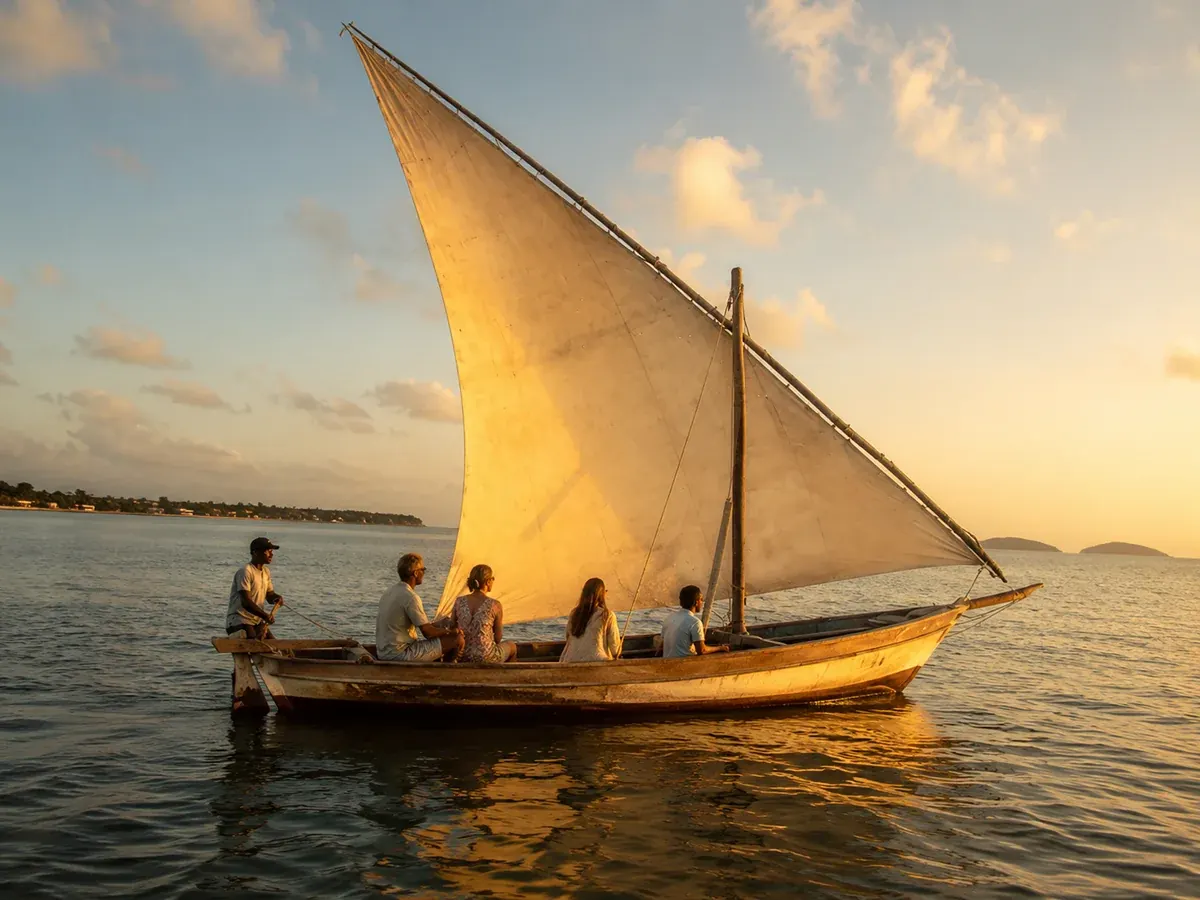
As the sun moves lower, boats, sails and people at a distance can become striking silhouettes. Positioning the subject against brighter water or sky can simplify the scene and draw attention to its shape. If you want to retain detail in the subject, try exposing for the subject rather than the brightest part of the background.
Warm light can also bring out the texture of sand, timber and woven materials. Pay attention to the direction of the light: side lighting often reveals texture, while backlighting can create a more graphic image.
Managing bright conditions
Bright coastal light can make it difficult to retain detail in both the sky and the sand. Check the brightest areas of your image and avoid allowing important highlights to become completely white. If your camera or phone offers exposure adjustment, a small reduction in exposure may help preserve detail in the sky and reflective surfaces.
At the same time, do not assume that every photograph needs to be perfectly balanced. Strong light and deep shadows can communicate the atmosphere of a place. The goal is to make deliberate choices rather than trying to eliminate every contrast.
Look beyond the obvious view
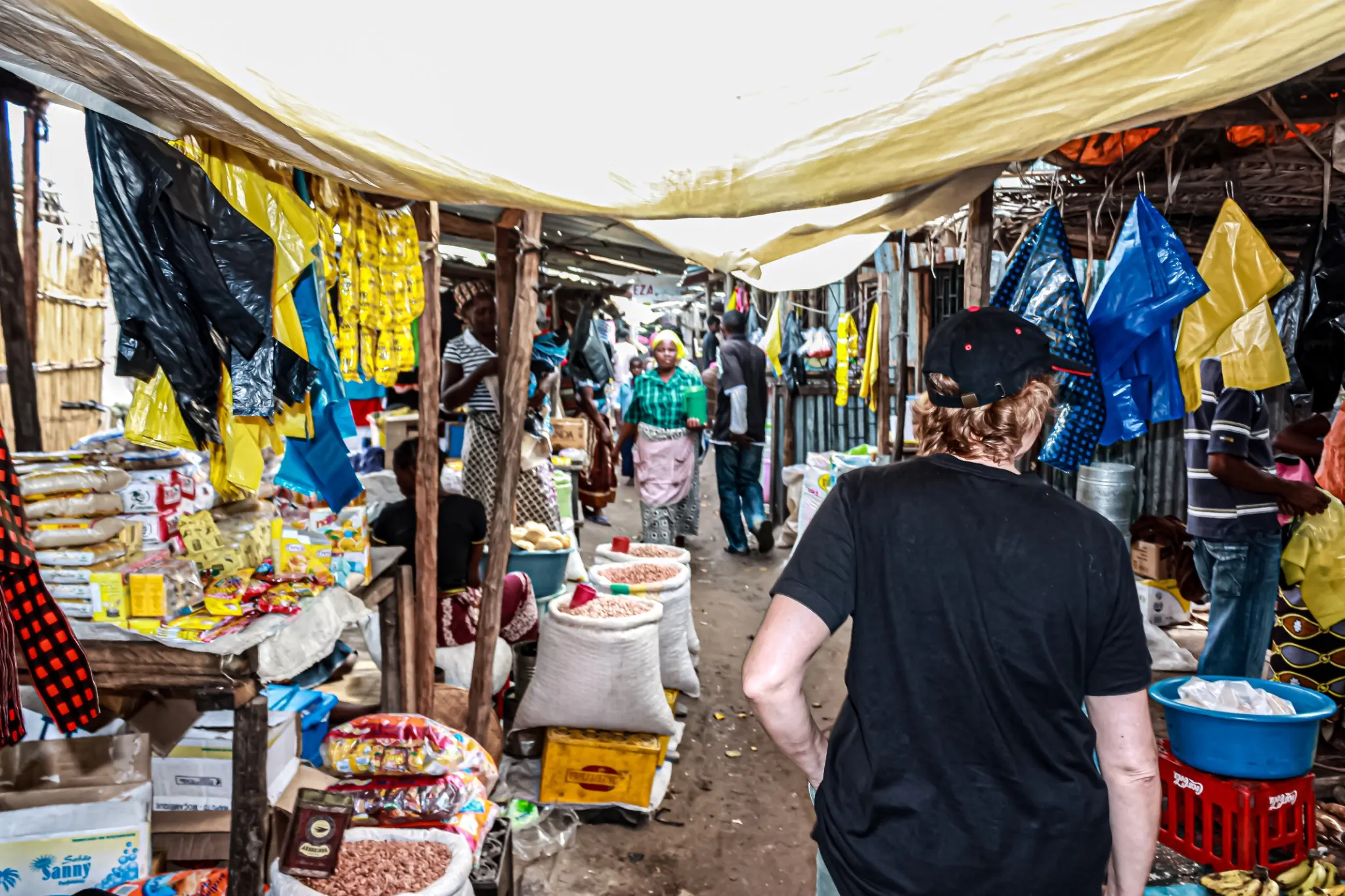
The islands and open sea are natural subjects, but the mainland has its own visual story. Boats at work, market colours, street details, changing tides and the movement of everyday life can help communicate what makes Vilanculos distinctive.
Wide landscape photographs are useful for establishing a sense of place, but smaller details can add context. A close view of a boat's timber, the pattern of nets or the texture of sand can help tell a more complete story when combined with broader coastal images.
Build a varied collection of photographs
Instead of taking many versions of the same view, try creating a small sequence of complementary images.
- Establishing view: A wide photograph showing the coastline, horizon or wider landscape.
- Subject photograph: A dhow, boat, shoreline feature or other element that gives the scene a clear focus.
- Detail: Textures, reflections, materials or patterns that communicate something about the setting.
- Human context: Everyday activity photographed respectfully and with permission where appropriate.
- Changing conditions: A second view of the same scene in different light or at a different stage of the tide.
This approach is useful whether you are documenting a trip for yourself or creating a collection for a travel journal. Together, the images can tell a richer story than a gallery made up entirely of postcard views.
Photograph the mainland as well as the islands
The Bazaruto Archipelago is an important part of Vilanculos's appeal, but the mainland should not be treated simply as a place to pass through before an excursion. The town, coastline and working waterfront offer their own subjects and perspectives.
Take time to observe how boats are used, how the shoreline changes with the tide and how different parts of the town relate to the sea. Local businesses, food, materials and everyday routines may offer visual details that help convey a stronger sense of place.
Approach these scenes with curiosity rather than assuming that every interesting detail should become a photograph. Some moments are better observed without a camera, and some settings are private or sensitive even when they appear accessible to visitors.
Photograph people with respect
People should not be treated as props in a travel photograph. If you want to take a recognisable photograph of someone, ask permission first and respect their answer. A smile or a lack of objection should not automatically be interpreted as consent, especially when there is a language barrier or a difference in power or circumstance.
Take particular care when photographing children. Seek permission from a parent or responsible guardian, consider whether the photograph is appropriate to take and share, and avoid publishing identifying details that could compromise a child's privacy.
If someone declines, put the camera away without arguing or repeatedly asking. You can still photograph the broader setting, architecture, boats or other details without making an individual the subject.
Be thoughtful when sharing photographs
Permission to take a photograph does not always mean permission to publish it commercially or use it in advertising. If you intend to use an image in a business, publication or promotional campaign, explain its intended use and agree on the necessary permissions beforehand.
When a local guide or photographer contributes knowledge, access or a story to your work, acknowledge that contribution where appropriate. A photograph can be visually strong while still leaving room for the people and perspectives behind it to be recognised.
Photograph wildlife without interference
The waters around Vilanculos and the Bazaruto Archipelago support marine life that may be encountered during suitable excursions. Dolphins, turtles, dugongs and other animals are part of the wider coastal environment, but sightings are never guaranteed.
Wildlife photography requires patience and restraint. The priority should always be the animal's welfare, not obtaining a closer view or a more dramatic image. Use distance, observe the animal's behaviour and allow it to move freely without interference.
Keep your distance
Never chase an animal to improve your photograph, surround it with a boat or ask an operator to pursue wildlife for a better angle. If an animal changes direction, moves away or appears disturbed, allow it space. Do not enter restricted areas or approach sensitive habitats simply to obtain a photograph.
When joining a boat excursion, choose an operator who takes wildlife protection seriously. Follow the guide's instructions, ask about responsible viewing practices and accept that the best decision may be to observe from a distance or leave an animal undisturbed.
Protect reefs and coastal habitats
Underwater photography and snorkelling require particular care around coral and other marine habitats. Never stand on or touch coral to steady yourself for a photograph. Avoid disturbing seagrass, nesting areas or other sensitive environments, and do not remove natural objects to improve a composition.
If you are snorkelling with a camera, make sure you can manage the equipment safely without compromising your own comfort or the environment. A photograph is not worth damaging a habitat or placing yourself, a guide or another swimmer at risk.
For more context on marine life and responsible visits to the archipelago, read our responsible traveller's guide to Bazaruto's dugongs and marine life.
Tell a more honest visual story
Travel photography influences how people imagine a destination before they arrive. Images can inspire curiosity, but they can also create unrealistic expectations if they exaggerate colours, omit important context or present unusual experiences as typical.
Editing is a normal part of photography, but it is worth keeping the result recognisable. Excessive saturation can make the sea look an unnatural colour, while heavy contrast adjustments can remove the detail that gives a scene its character. Aim to enhance what you saw rather than transform the destination into something it was not.
Represent the conditions accurately
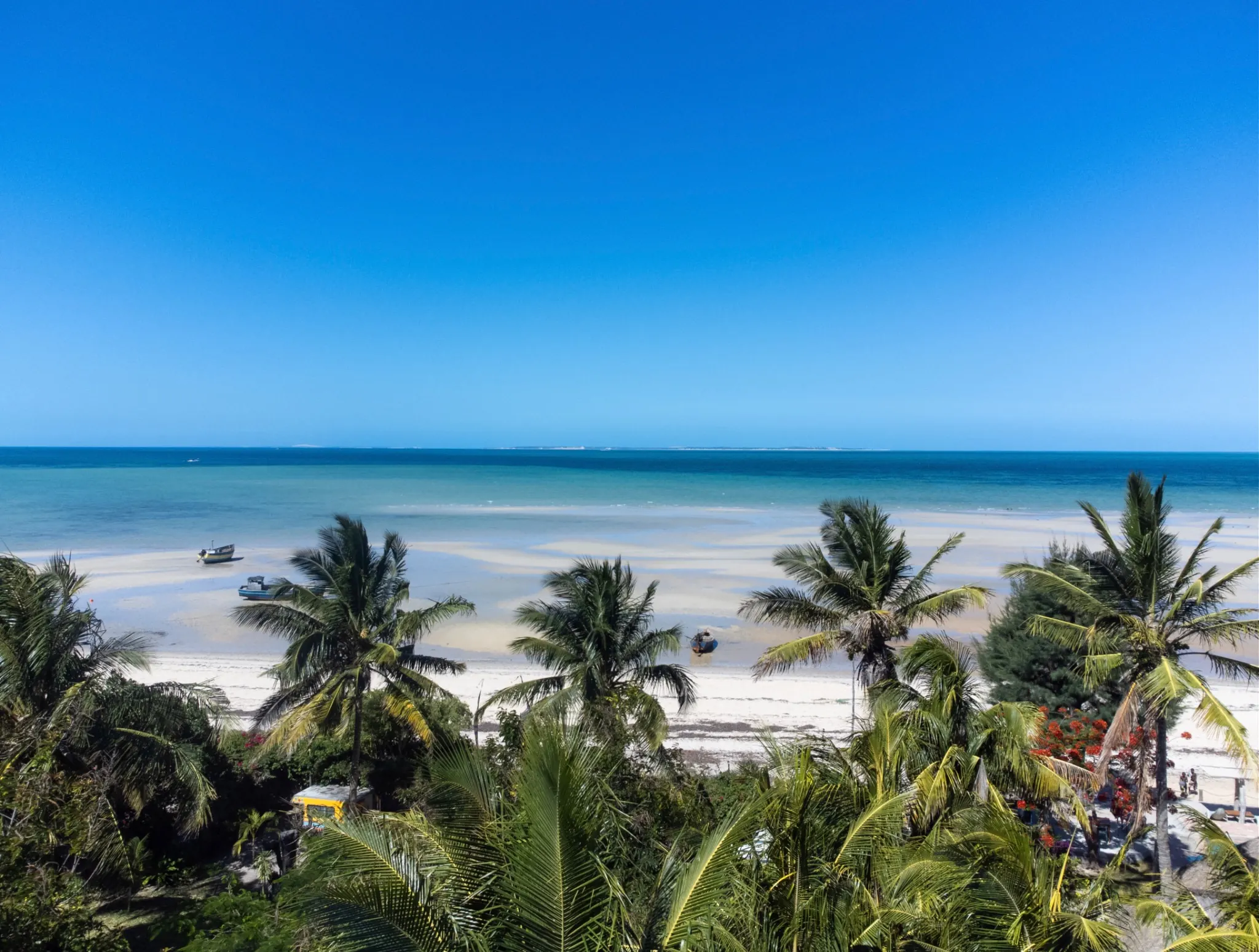
A clear blue sky and turquoise water may be part of your experience, but they do not describe every day in Vilanculos. Clouds, changing tides, wind and different sea conditions are all part of a coastal destination.
A photograph should not imply that a particular weather condition, wildlife encounter or activity is guaranteed. If you share images to help other travellers plan, explain the context when it matters and avoid presenting a single moment as a promise about what every visitor will experience.
Use accurate captions and locations
Captions help give photographs meaning. Identify the location as accurately as you can, avoid guessing the names of islands or marine species, and distinguish between what you know and what you believe you have photographed.
If you are unsure about an animal, landmark or local detail, ask a knowledgeable guide or check a reliable source before publishing the caption. Accurate information is more useful to future visitors than a confident but incorrect description.
When a photograph tells a story about a person or community, include context where appropriate and avoid captions that stereotype people or reduce a complex place to a single impression.
A simple photo walk in Vilanculos
You do not need a complicated plan or specialist equipment to create a thoughtful set of photographs. A short walk with a clear intention can help you observe the coast more carefully and return with a varied collection of images.
- Begin with the horizon. Take a wide view that establishes the coastline, sky and sea. Pay attention to the horizon line and keep it level unless a deliberate composition calls for something different.
- Look for patterns. Notice boats, sails, reflections, footprints and the lines formed by the shoreline. Repetition can create a strong composition.
- Move closer to details. Photograph textures, materials and small features that help communicate the character of the place.
- Observe before photographing people. Consider privacy, ask permission when appropriate and accept a refusal without pressure.
- Wait for the light to change. Revisit a scene later rather than assuming the first photograph is the best one.
- Leave wildlife undisturbed. Keep a respectful distance and follow local guidance, even if this means missing a photograph.
- Review your images thoughtfully. Keep the photographs that best communicate the scene rather than selecting only those with the strongest colours or most dramatic effects.
Let the walk remain flexible. If the light changes, a boat moves or a scene becomes busy, take the opportunity to observe rather than trying to force the original plan.
Protect your camera and equipment
Coastal conditions can be demanding for photographic equipment. Salt spray, sand, humidity and sudden changes in weather all deserve attention, whether you use a camera with interchangeable lenses or a smartphone.
- Protect against salt and sand. Keep equipment in a suitable bag when not in use and avoid changing lenses in exposed, windy conditions where possible.
- Carry a clean cloth. Use a suitable lens cloth to remove smudges and water marks. Avoid wiping abrasive sand across a lens or screen.
- Use a dry bag when appropriate. Extra protection can be useful on boats or during activities close to the water, but confirm that your bag or case is suitable for the conditions you expect.
- Manage humidity. Allow equipment to dry appropriately after exposure to moisture and follow the manufacturer's guidance for storage and cleaning.
- Keep batteries and memory cards secure. Store spare batteries and cards in a protected place and avoid leaving equipment exposed to direct heat for long periods.
- Back up your photographs. If the images matter to you, make a second copy when practical rather than relying on a single device or memory card.
Good preparation helps you spend less time worrying about equipment and more time observing the destination. You do not need to carry every accessory; choose what is useful for your planned activities and the conditions you expect.
Planning a photography-focused stay
If photography is an important part of your visit, allow enough time to explore rather than trying to capture everything in a single excursion. Different subjects work best under different conditions, and a flexible schedule gives you more opportunities to respond to the light.
Early mornings may suit quiet shoreline scenes, while late afternoons can be useful for silhouettes and warmer tones. A boat excursion offers a different perspective on the coast, but the route, timing and opportunities for photography depend on the operator and conditions. Confirm the arrangements in advance and never ask a guide to compromise safety or wildlife protection for a photograph.
It can also be useful to balance photography with time away from the camera. Put the equipment down during a meal, a conversation or a moment that feels private. The purpose of documenting a trip is to remember and communicate the experience, not to turn every part of it into a photographic task.
For help planning the wider visit, read our guide to the best time to visit Vilanculos and our guide to discovering the mainland town.
Where the story begins
SAMARA Lodge Vilanculos can be part of a trip built around seeing the coast at a thoughtful pace. The mainland provides a base for planning excursions, exploring the town and making time for the quieter details that might otherwise be missed.
Whether your photographs focus on the shoreline, traditional boats, marine life or everyday scenes, the same principles apply: observe carefully, represent the destination honestly and respect the people and environments that make it distinctive.
As you plan your stay, explore the SAMARA journal for destination information and practical advice. Review the accommodation options for your dates, and confirm the details of any excursion or transfer before relying on it for your plans.
Plan your stay: Explore SAMARA booking options.
Photograph the place as it is, not only as you hoped it would look.
Frequently asked questions about photographing Vilanculos
When is the best time of day to photograph Vilanculos?
Early morning and late afternoon often provide softer light and longer shadows than the middle of the day. However, the best time depends on your subject, the weather and the effect you want to achieve. Observe the conditions and allow yourself time to work with the changing light.
Can I photograph people in Vilanculos?
Be respectful and ask permission before taking identifiable photographs of people, particularly when you intend to publish or use the images commercially. Take special care with children, seek permission from a parent or responsible guardian and respect anyone who declines to be photographed.
What should I photograph besides the islands?
The mainland offers plenty of subjects, including coastal landscapes, boats, reflections, local food, market colours and everyday activity. A combination of wide views, smaller details and respectful photographs of daily life can provide a fuller picture of the destination.
How can I photograph dolphins, dugongs or turtles responsibly?
Keep your distance, follow your guide's instructions and never chase or surround an animal for a better image. Do not ask a boat operator to pursue wildlife. If an animal moves away or appears disturbed, allow it to leave undisturbed. Sightings are never guaranteed.
Do I need a professional camera?
No. A smartphone or compact camera can produce excellent travel photographs when you pay attention to light, composition and timing. Protect your equipment from salt spray, sand and moisture, and choose settings that you can use confidently in the conditions.
How should I edit photographs of the coast?
Adjustments to exposure, contrast and colour can help an image reflect the scene you experienced. Avoid excessive saturation or editing that creates a misleading impression of the water, landscape or conditions. If the image is intended to inform other travellers, accuracy is particularly important.
Can I use photographs of local people for business or marketing?
Do not assume that permission to take a photograph automatically permits commercial use. Explain the intended use, obtain appropriate permission and agree on any necessary terms before publishing the image in advertising or promotional material.
Explore Vilanculos with a thoughtful eye
Photographing Vilanculos well is less about collecting perfect images than about learning to notice the destination. The light changes, the shoreline shifts with the tide, boats move across the horizon and everyday life continues beyond the scenes visitors come to see.
Give yourself time to observe, make deliberate choices about what belongs in the frame and respect the people and wildlife around you. The result can be a more meaningful collection of photographs and a more considered experience of the coast itself.
Continue exploring: Discover Vilanculos, explore the Bazaruto Archipelago and learn about protecting the coast.